
- No products in the cart.
How to Use Incense at Home: A Practical Routine
16
Feb
A practical incense routine starts before lighting and ends after the ember is out and the holder has cooled. Keep the product instructions close, choose the correct support, and plan how you will finish the session. Fragrance preference does not replace those checks.
This guide covers the order of the decisions. Use the incense safety checklist for the precautions that apply across formats.
1. Identify the incense and its instructions
Read the packet for its format, intended equipment, lighting method and extinguishing directions. Keep the label rather than transferring loose pieces into an unmarked container. If directions or compatibility details are missing, ask the seller before use.
Choose the setup guide that matches the package:
- Incense sticks: check construction, support and the falling-ash area.
- Ordinary cones: check the designated cone seat and any lid instructions.
- Backflow cones: confirm a compatible backflow burner and aligned openings.
- Coils: check the support, diameter and intended position.
These routes cover distinct equipment. For resin, loose incense or other formats, obtain the directions for that product and its intended heating system rather than adapting a stick method.
2. Prepare the space and put the spare pack away
Choose a stable, heat-resistant location clear of combustible items. Keep children and pets away, and remove packaging from the burning area. Test the fit only while the incense and holder are cold.
Leave enough time and attention for supervision. The London Fire Brigade advises keeping incense in heat-resistant holders on stable surfaces and extinguishing it before leaving the room or going to bed. If you cannot remain attentive, use the incense another time.
Close the remaining pack as its maker directs and return it to its storage place. The storage guide covers labels, original packaging and separating fragrances.
3. Keep ventilation separate from the smoke display
Make sure the room has appropriate ventilation. Position the burner away from a direct draft, particularly for backflow incense, without closing the room to concentrate scent or improve the waterfall.
An air purifier does not replace this decision. The EPA describes filtration as a supplement to source control and ventilation and says air cleaners cannot remove every pollutant. If the room conditions are unsuitable, skip the burn. Do not use incense to clean the air or cover up a suspected air-quality problem.
4. Follow the supplied lighting method and stay present
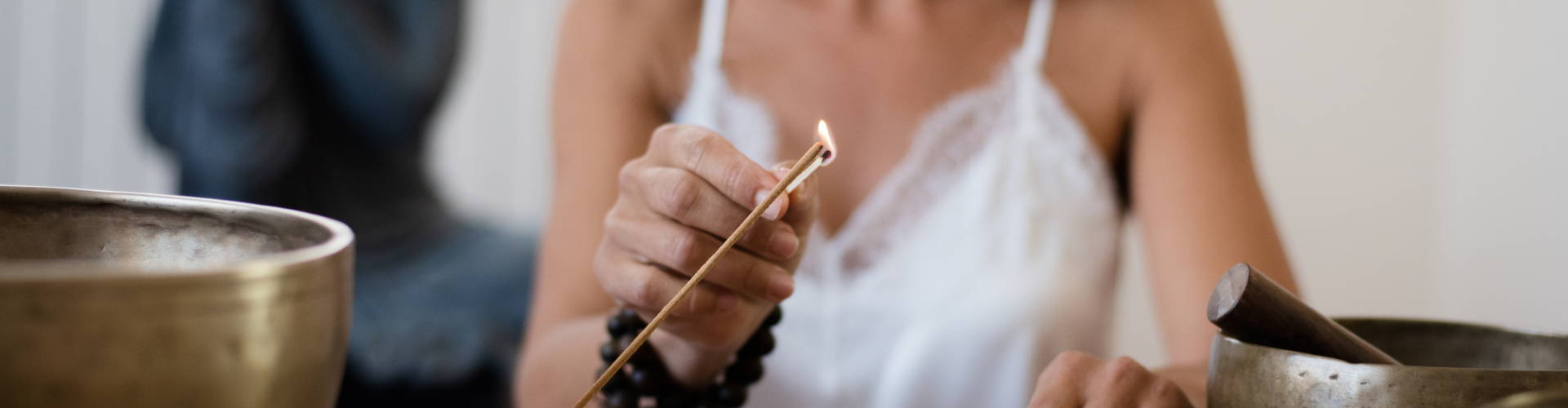
Use the sequence and handling tools specified for the incense and holder. There is no lighting time that applies to every format and product. Never handle a lit cone with bare fingers or move a burning holder to adjust the room arrangement.
Stop if the holder becomes unstable, the setup looks damaged or smoke causes discomfort. Do not add more incense to test how strong a fragrance can become.
If the incense repeatedly goes out
Pause and check the directions, holder fit and storage information. Repeatedly applying a flame for longer is not a substitute for finding the problem. Do not press a glowing tip against the holder to regulate burning, heat the product to dry it, or add oils to change its scent.
Keep the packet and ask the maker if you cannot identify the cause. For backflow issues, use the smoke-flow checks in the setup guide; for residue or a stuck end, wait until everything is cold and follow the burner care guide.
5. End the session before you leave
Use the product's extinguishing method and confirm that the ember is out. Do this before leaving the room, becoming sleepy or starting something that prevents supervision. You do not have to keep incense burning simply to use the whole piece.
The Country Fire Authority warns that recently extinguished incense burners can still cause burns. Leave the incense, ash and holder to cool completely before moving, cleaning or disposal. There is no universal cooling time.
6. Check the setup before its next use
Remove cooled loose ash and clean only as the holder's care instructions permit. Check for cracks, loose parts, instability or an obstructed opening. Keep a questionable holder unused while you ask for guidance; do not test it by burning another piece.
For planning the next session, read when to use incense and when to skip it. If your question is how much to burn, our daily-quantity guide explains why room size cannot set a safe stick count.


